What You Need to Cast Your Birth Chart
Creating an accurate birth chart requires three essential pieces of information: your birth date, exact birth time, and birth location. The birth date determines where the Sun and slower-moving planets were positioned. The exact birth time—preferably to the minute—is crucial for calculating your Rising sign (Ascendant) and house placements, as these shift approximately every two hours. Your birth location establishes the geographical coordinates necessary for precise astronomical calculations.
If you don't know your exact birth time, check your birth certificate, hospital records, or ask family members who might remember. Some astrologers can perform "chart rectification" to estimate your birth time based on significant life events, though having the actual time is always preferable. Even without a birth time, you can still explore your planetary placements, though you'll miss crucial information about your Rising sign and houses.
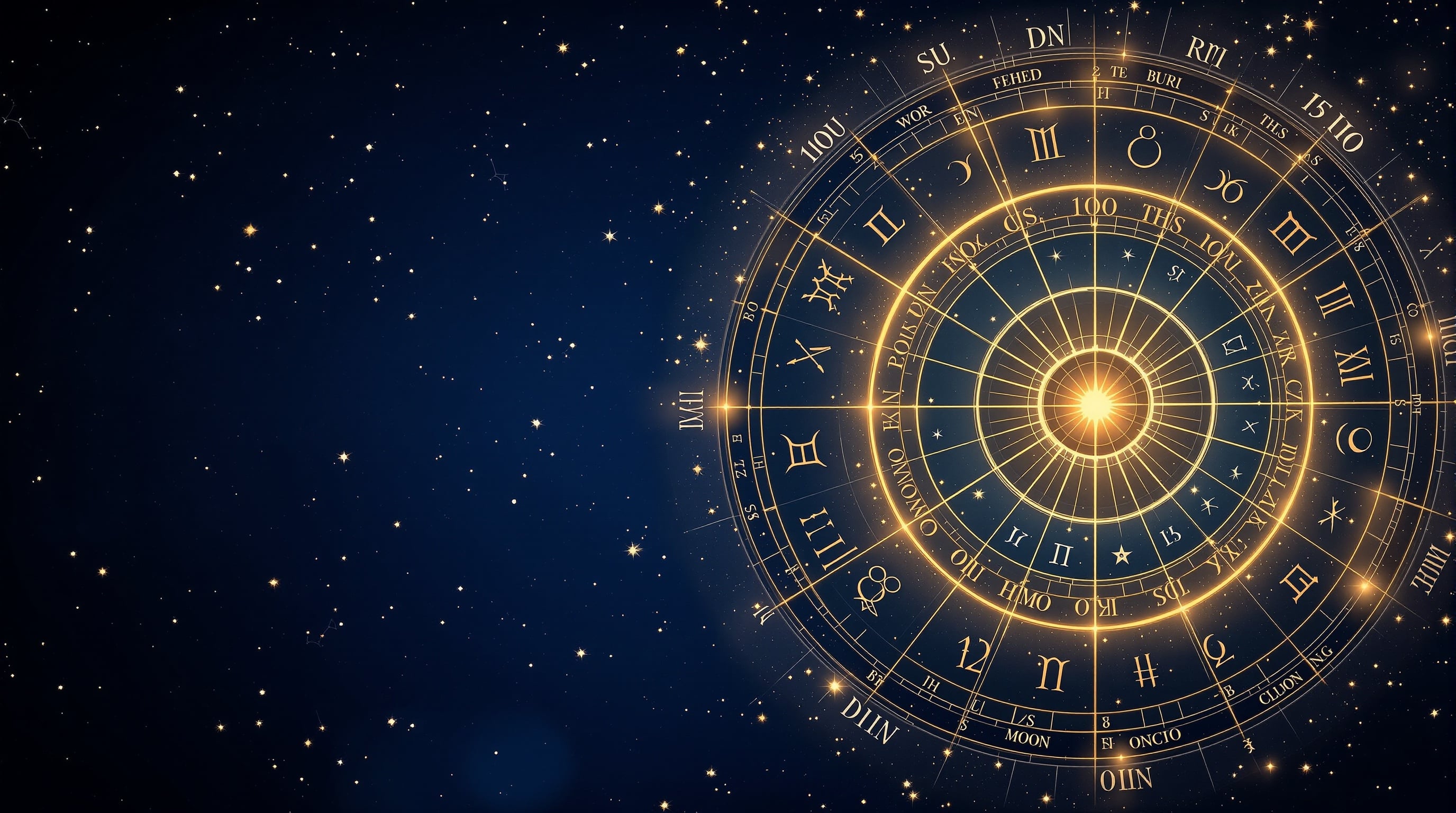
Numerous free online tools can generate your birth chart instantly. Reputable websites include Astro.com (which offers the most detailed free charts), Cafe Astrology, Astro-Charts, and Astro-Seek. Simply enter your information, and the site will calculate your chart, displaying it as a circular diagram filled with symbols representing planets, signs, and geometric lines showing planetary aspects. This wheel is your cosmic DNA—a unique map of the sky at your birth moment.
The "Big Three": Your Astrological Foundation
Among all the components in your birth chart, three placements form the foundation of your astrological identity: your Sun sign, Moon sign, and Rising sign (Ascendant). These are often called "The Big Three" and provide the most immediately accessible insights into your personality. Understanding these three placements gives you a solid grasp of your core self, emotional nature, and how you interact with the world.
While popular astrology focuses almost exclusively on the Sun sign, professional astrologers know that the Big Three work together to create a more complete picture. Think of them as three lenses through which you experience life: the Sun represents your conscious will, the Moon your unconscious reactions, and the Rising your interface with external reality. Together, they form a trinity that captures the essence of your being.
Your Sun Sign: Your Core Identity
Your Sun sign represents your essential self—your ego, vitality, and life purpose. It describes what you're here to develop and express in this lifetime. The Sun is your conscious identity, the "I am" of your existence. It governs your sense of self, creative expression, and the qualities you're learning to embody and radiate. When someone asks "What's your sign?" they're asking about your Sun sign.
The Sun's position by zodiac sign reveals your fundamental approach to life. A Leo Sun seeks recognition and creative self-expression, while a Virgo Sun strives for improvement and service. The house placement of your Sun shows the life area where you're meant to shine. For example, a Sun in the 10th house suggests your identity is closely tied to career and public reputation, while a Sun in the 4th house indicates your sense of self develops through family and private life.
Your Sun sign also represents your father or masculine parent figures, authority, and how you express confidence. Challenges to your Sun (difficult aspects from other planets) can indicate struggles with self-esteem, identity, or stepping into your power. Cultivating the positive qualities of your Sun sign is a lifelong journey toward self-actualization and authentic living.
Your Moon Sign: Your Emotional World
If the Sun represents your conscious self, the Moon governs your unconscious emotional nature. Your Moon sign describes your instinctive reactions, emotional needs, and what makes you feel safe and nurtured. It's your inner child, your private self that only close intimates truly see. While your Sun sign is who you're becoming, your Moon sign is where you come from emotionally.
The Moon changes signs approximately every 2.5 days, making it more personal than the Sun. Someone with a Cancer Moon needs emotional security and deep connections, while an Aquarius Moon requires freedom and intellectual stimulation in relationships. Your Moon sign reveals what you need to feel emotionally fulfilled—needs that must be met for overall well-being, regardless of what your Sun sign wants to achieve.
The Moon also represents your mother or nurturing parent, your relationship with women, and your capacity to care for others. Its house placement shows where you seek emotional fulfillment. A Moon in the 7th house finds emotional security through partnerships, while a Moon in the 11th house needs friendship and community. Understanding your Moon sign helps you honor your authentic emotional needs rather than suppressing them.
Your Rising Sign (Ascendant): Your Social Mask
Your Rising sign, or Ascendant, is the zodiac sign that was rising on the eastern horizon at the moment of your birth. It represents your persona—the mask you wear when meeting the world, your physical appearance, and your approach to new situations. If the Sun is your destination and the Moon your starting point, the Rising sign is the vehicle you drive to get there.
The Ascendant changes signs approximately every two hours, making it the most time-sensitive point in your chart. This is why exact birth time is so crucial. Your Rising sign colors how others perceive you initially and how you instinctively react to your environment. A Scorpio Rising may appear mysterious and intense, while a Sagittarius Rising seems adventurous and optimistic, regardless of their Sun or Moon signs.
The Rising sign also determines your entire house structure, as the 1st house cusp is always the Ascendant. This makes it foundational to your chart's architecture. The ruling planet of your Rising sign (called your "chart ruler") holds special importance, as it represents your primary approach to life. For example, if you have Gemini Rising, Mercury becomes your chart ruler, making communication and information gathering central to your life path.
Step-by-Step Guide to Reading Your Chart
Step 1: Identify your Big Three. Start by locating your Sun, Moon, and Rising signs in your birth chart. Most chart printouts will clearly indicate these placements. Read descriptions of each sign to understand how they manifest in your personality. Notice how these three signs interact—do they share the same element, creating harmony? Or are they in conflicting elements, creating internal tension?
Step 2: Examine the houses your Big Three occupy. Look at which houses contain your Sun, Moon, and Ascendant (which is always on the 1st house cusp). These houses represent life areas of particular importance for you. For example, if your Moon is in the 5th house, emotional fulfillment comes through creativity, children, or romantic expression.
Step 3: Consider the elements and modalities. Count how many planets you have in each element (Fire, Earth, Air, Water) and modality (Cardinal, Fixed, Mutable). An abundance of planets in one element or modality creates a dominant theme. Someone with many planets in water signs is highly emotional and intuitive, while someone with mostly cardinal signs is action-oriented and initiating.
Step 4: Look for stelliums. A stellium is three or more planets in the same sign or house. This concentration of energy creates a powerful focal point in your chart. A stellium in Capricorn, for instance, emphasizes ambition, discipline, and career focus, while a stellium in the 7th house highlights relationships as a central life theme.
Step 5: Note major aspects. Aspects are geometric angles between planets that describe how they interact. Look for conjunctions (planets close together), oppositions (planets across from each other), squares (90-degree angles creating tension), and trines (120-degree angles indicating ease). These aspects add complexity to your chart interpretation.
Beyond the Big Three: A Glimpse at the Planets
Once you're comfortable with your Sun, Moon, and Rising signs, explore the other planets in your chart. Mercury reveals how you think and communicate, Venus shows what you value and how you love, and Mars describes how you take action and assert yourself. These personal planets change signs frequently and add crucial detail to your personality portrait.
Jupiter and Saturn, the social planets, describe your relationship with expansion and contraction, optimism and discipline. Jupiter's sign and house show where you find luck and growth, while Saturn indicates where you face challenges and must develop mastery. The outer planets—Uranus, Neptune, and Pluto—are generational, moving slowly enough that everyone born within several years shares the same placement.
Each planet in your chart tells part of your story. Mars in Aries is assertive and direct, while Mars in Libra seeks harmony even in conflict. Venus in Taurus values stability and sensual pleasure, while Venus in Gemini craves variety and intellectual connection. By synthesizing all these planetary placements, along with their house positions and aspects, you create a rich, multidimensional understanding of your astrological blueprint.
Remember, chart reading is an art that develops over time. Don't expect to master it overnight. Start with the basics, add layers gradually, and trust your intuition as you interpret symbols. Your birth chart is a living document that reveals new insights as you grow and evolve. The cosmos has gifted you a personal map—learning to read it is a journey of profound self-discovery.
The Importance of Accurate Birth Time
Your birth time is the most crucial and variable piece of data in astrology. While your birth date determines your Sun, Moon (usually), and slower planetary positions, your exact birth time determines your Rising sign and entire house structure. Even a difference of four minutes can change your Rising sign, while a few hours completely rearranges which houses planets occupy, dramatically altering your chart's interpretation.
If you don't know your birth time, start by checking your birth certificate. In many countries and U.S. states, birth time is routinely recorded. If it's not on your certificate, try contacting the hospital where you were born—many maintain birth records including time. Family members might remember, though memories can be unreliable. "Early morning" or "late afternoon" at least narrows possibilities.
If you absolutely cannot find your birth time, you have options. Some astrologers specialize in chart rectification—using significant life events to work backward and determine your likely birth time. This requires detailed information about when major events occurred in your life. Another option is solar chart, using noon as a default time, though this sacrifices house information and Rising sign accuracy. A chart without time still shows all planetary positions by sign, which provides valuable information even without houses.
Understanding Chart Patterns
Beyond individual placements, the overall pattern planets form in your chart provides important information. Are your planets spread evenly around the chart (splash pattern), clustered in one area (bundle pattern), or divided into two groups (seesaw pattern)? Each distribution creates a distinct life experience and approach to the world.
A splash pattern, with planets distributed relatively evenly, indicates a well-rounded person with diverse interests. These individuals can adapt to many situations but may struggle to find focus. A bundle pattern, with all planets contained within a 120-degree span, creates intense focus in specific life areas represented by those houses. These people are specialists rather than generalists, often accomplishing remarkable things in their chosen focus area.
A bowl pattern has all planets on one side of the chart, creating a sense of mission or purpose in filling the empty hemisphere. A bucket pattern is similar but has one planet (the "handle") opposing the others—this handle planet becomes a focal point for expressing all the other energies. A locomotive pattern has planets spread around two-thirds of the chart with one-third empty, creating powerful drive and momentum.
The seesaw pattern has planets in two distinct groups opposing each other, creating a life of balancing opposites—perhaps career versus family, or personal needs versus relationship demands. Recognizing your chart pattern helps you understand your overall life approach beyond individual planet-sign combinations.
Hemispheric Emphasis
Charts can be divided into hemispheres, and where your planets cluster reveals important themes. The Eastern hemisphere (left side, houses 10-12, 1-3) emphasizes self-determination and individual initiative. People with most planets here shape their own destiny and value independence. The Western hemisphere (right side, houses 4-9) emphasizes relationships and cooperation. These individuals fulfill themselves through partnerships and interaction with others.
The Northern hemisphere (bottom half, houses 1-6) represents private life, personal development, and subjective experience. Planets here indicate someone focused on personal growth, inner life, and individual concerns. The Southern hemisphere (top half, houses 7-12) represents public life, social contribution, and objective achievement. These placements suggest someone oriented toward career, community, and leaving a mark on the world.
Most people have planets in multiple hemispheres, creating balance. However, strong emphasis in one hemisphere (seven or more planets) significantly colors life experience. Someone with most planets in the Northern Eastern quadrant (houses 1-3) is highly self-directed and focused on personal development. Someone with most planets in the Southern Western quadrant (houses 7-9) finds meaning through relationships and social engagement.