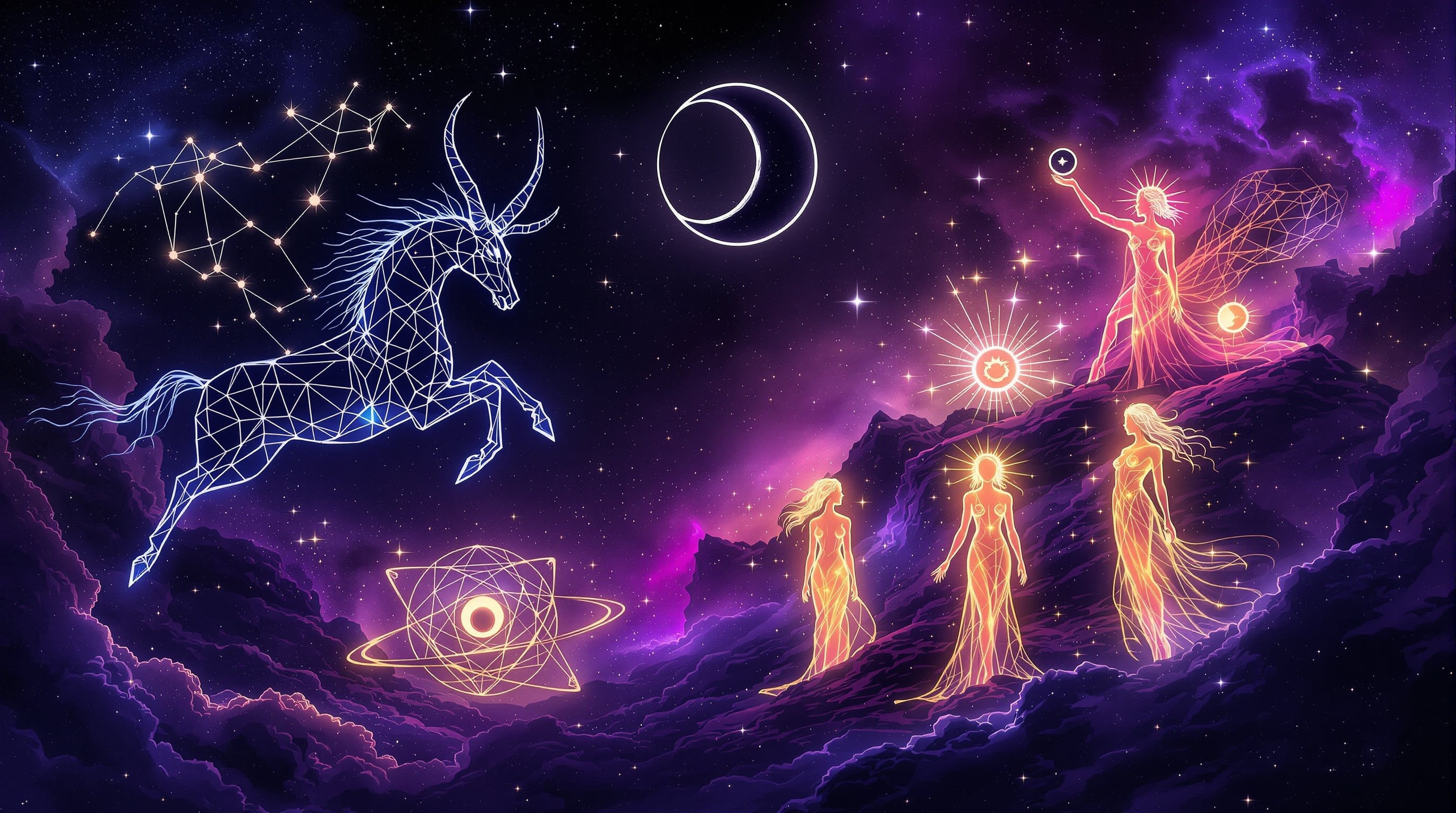
Chiron: The Wounded Healer
Chiron is a small celestial body orbiting between Saturn and Uranus, discovered in 1977 and classified as a comet-asteroid hybrid or "centaur." In mythology, Chiron was a wise centaur who, despite his healing abilities, carried an incurable wound. This mythological theme defines Chiron's astrological meaning: the wounded healer who transforms pain into wisdom and helps others through similar struggles.
In your birth chart, Chiron represents your core wound—an area of life where you feel inadequate, painful, or broken. This wound often stems from childhood experiences and becomes a lifelong sensitivity. Paradoxically, this very wound becomes your greatest gift, as working through your own pain develops compassion and expertise that allows you to heal others. The sign and house of your Chiron reveal both your deepest vulnerability and your healing potential.
Chiron in Aries carries wounds around identity, assertiveness, and worthiness to exist. These individuals often struggle with self-confidence but ultimately teach others about courage and self-assertion. Chiron in Cancer indicates wounds around nurturing, belonging, and emotional safety, yet these people often become exceptional caregivers. Chiron in Capricorn struggles with achievement and authority but can become wise mentors who help others build success without sacrificing authenticity.
The Chiron Return occurs around age 50-51, when Chiron returns to its natal position. This midlife transit brings your core wound to the surface for deep healing work. Many people experience this period as a crisis that ultimately leads to profound acceptance and the full flowering of their healing gifts. Chiron transits and aspects activate healing processes, often through painful experiences that ultimately lead to wisdom and wholeness.
Black Moon Lilith: Your Inner Wild
Black Moon Lilith (often just called Lilith) is not a physical body but a calculated point—the Moon's apogee, or the point in the Moon's orbit farthest from Earth. In mythology, Lilith was Adam's first wife who refused to submit and was cast out of Eden, becoming a symbol of the wild, untamed feminine that refuses to be controlled. Astrologically, Lilith represents our shadow self, repressed desires, and the parts of ourselves we've been taught to deny.
Lilith in your chart shows where you refuse to conform, where you've experienced rejection or shame, and where you access raw, primal power. It represents sexuality outside societal norms, rage at injustice, and the aspects of yourself you may hide from polite society. Lilith is neither good nor evil—she's authentic power that threatens structures built on repression and compliance.
Lilith in Aries expresses as fierce independence and refusal to be controlled, sometimes manifesting as combative energy. Lilith in Scorpio embodies powerful sexuality and psychological intensity that may have been shamed. Lilith in Capricorn rebels against authority and traditional structures, often having complicated relationships with power. Lilith in Libra struggles with relationship dynamics, sometimes alternating between people-pleasing and stark autonomy.
Working consciously with Lilith involves reclaiming disowned parts of yourself and integrating your shadow. Rather than acting out Lilith's energy destructively or repressing it entirely, healthy Lilith expression means owning your authentic desires, anger, and power. Lilith asks: What parts of yourself have you exiled to be acceptable? Where do you need to stop apologizing for who you are? Embracing Lilith energy restores wholeness and personal power.
The Four Major Asteroids
Thousands of asteroids orbit between Mars and Jupiter, but four have achieved prominence in modern astrology: Ceres, Pallas, Juno, and Vesta. Discovered in the early 1800s, these "asteroid goddesses" add feminine archetypes to the primarily masculine traditional planet pantheon. They provide nuanced information about nurturing, wisdom, partnership, and devotion.
Ceres: Nurturing and Self-Care
Ceres is the largest asteroid and the first discovered (1801). Named for the Roman goddess of agriculture and motherhood, Ceres represents nurturing, food, caretaking, and our relationship with Mother Nature. In your chart, Ceres shows how you nurture others and need to be nurtured yourself. It also relates to grief and loss, as Ceres' myth involves the seasonal separation from her daughter Persephone.
Ceres in fire signs nurtures through encouragement and inspiration. Ceres in earth signs provides practical care and material support. Ceres in air signs nurtures through communication and mental stimulation. Ceres in water signs offers emotional support and empathetic understanding. Ceres' house position shows the life area where nurturing themes are most significant. Difficult Ceres aspects can indicate challenges with giving or receiving care, food issues, or unresolved mother wounds.
Pallas: Wisdom and Strategy
Pallas Athene (often called Pallas Athena) represents wisdom, strategy, creative intelligence, and the warrior spirit. Named for the goddess who sprang fully formed from Zeus's head, Pallas governs pattern recognition, political skill, and the ability to see the big picture. She's the strategist, artist, and healer who uses intelligence rather than brute force.
Pallas in your chart shows how you solve problems, recognize patterns, and express creative intelligence. Pallas in Gemini excels at verbal strategy and communication-based problem-solving. Pallas in Scorpio has penetrating insight into hidden patterns and psychological dynamics. Strong Pallas placements often indicate artistic talent, political acumen, or healing abilities. Pallas also relates to androgyny and gender expression beyond binary categories.
Juno: Partnership and Commitment
Juno, named for Jupiter's wife and queen of the gods, represents committed partnership, marriage, and the type of partner we're drawn to. While Venus shows what we're attracted to romantically, Juno reveals what we need for lasting partnership and the qualities we seek in a spouse. Juno also deals with power dynamics, jealousy, and commitment issues within relationships.
Juno's sign shows your partnership needs and what you seek in a long-term mate. Juno in Aries needs an independent, dynamic partner and freedom within commitment. Juno in Libra seeks an equal, harmonious partnership and may marry for love and companionship. Juno in Capricorn values loyalty, maturity, and possibly marries for status or security. Aspects to Juno reveal how easily you form committed bonds and what challenges you face in partnership.
Vesta: Devotion and Spirituality
Vesta represents sacred devotion, focus, and what you hold sacred. Named for the goddess of the hearth whose priestesses tended the eternal flame, Vesta shows where you can achieve extraordinary focus and what you're willing to sacrifice for. Vesta relates to sexuality as sacred rather than casual, work as spiritual practice, and dedication to a higher purpose.
Vesta's placement shows where you focus intensely and what you devote yourself to. Vesta in the 6th house suggests devotion to work and service. Vesta in the 12th house indicates spiritual dedication. Strong Vesta can indicate periods of celibacy or withdrawal from normal life to pursue a focused goal. Vesta asks what you consider sacred and where you channel your most concentrated energy. Honoring Vesta means protecting your sacred focus time and energy.
How to Find These Points in Your Chart
Most free birth chart calculators now include Chiron automatically, as it's become standard in modern astrology. For Black Moon Lilith and the asteroids, you may need to specifically request them. Astro.com's extended chart selection allows you to add numerous additional points, including all the bodies discussed here. Simply check the boxes for Chiron, Lilith (select "True Lilith" or "Mean Lilith"), Ceres, Pallas, Juno, and Vesta.
These points will appear on your chart wheel with their own symbols. Chiron looks like a key (⚷), Lilith is often shown as a dark crescent moon, and the asteroids have their own symbols: Ceres (⚳), Pallas (⚴), Juno (⚵), and Vesta (⚶). They'll be positioned in specific signs and houses, just like planets, and form aspects to your other placements.
When interpreting these points, use the same principles you'd apply to planets: consider the sign (how the energy expresses), the house (where in life it manifests), and aspects to other planets (how it interacts with other parts of your psyche). While these bodies are considered less influential than the major planets, they add important detail and nuance, especially when they form tight aspects to personal planets or angles.
Exploring Chiron, Lilith, and the asteroids adds sophisticated layers to chart interpretation. These points illuminate wounds and healing, shadow and power, nurturing and devotion—themes sometimes overlooked when focusing only on traditional planets. As you deepen your astrological practice, these additional points reveal subtle dynamics and provide language for experiences the major planets don't quite capture. They remind us that the cosmos offers infinite wisdom for those willing to look beyond the obvious.
Eris: The Discord Maker
Eris is a dwarf planet beyond Pluto, discovered in 2005 and named for the Greek goddess of discord and strife. In mythology, Eris wasn't invited to a wedding and, in revenge, threw a golden apple inscribed "to the fairest" among the goddesses, sparking the conflict that led to the Trojan War. Astrologically, Eris represents the excluded feminine, righteous anger at injustice, and disruption that reveals truth.
In your chart, Eris shows where you feel excluded, where you create discord (intentionally or not), and where you refuse to play by rigged rules. Eris doesn't seek harmony at the cost of truth—she exposes hypocrisy and false peace. While this can be destructive, it's also necessary for authentic change. Eris asks: What systems need disrupting? Where is superficial harmony hiding injustice?
Eris in Aries (where it's been since the 1920s and will remain until 2048) has correlated with women's rights movements, social justice activism, and challenges to patriarchal structures. Personally, Eris's house position shows where you might be the troublemaker, the excluded one, or the truth-teller who disrupts comfortable illusions. Working with Eris consciously means using discord constructively—disrupting what needs changing, not creating chaos for its own sake.
The Part of Fortune: Where You Find Joy
The Part of Fortune (sometimes called Fortuna) is a calculated point based on the positions of your Sun, Moon, and Ascendant. In a day chart (Sun above the horizon), it's calculated as Ascendant + Moon - Sun. In a night chart (Sun below the horizon), it's Ascendant + Sun - Moon. This Arabic Part represents where you find natural luck, joy, and fulfillment.
The Part of Fortune's sign and house show where life flows most easily and where you can cultivate happiness and success. Part of Fortune in the 2nd house suggests natural financial luck and finding joy through material security. In the 9th house, fortune comes through travel, education, and philosophical pursuits. In the 6th house, meaningful work and health practices bring fulfillment.
While the Part of Fortune indicates ease, it's not entirely passive—you must consciously develop the qualities of its sign and house to access its benefits. Part of Fortune in Capricorn requires discipline and long-term planning to unlock its gifts, while in Sagittarius, it requires adventurousness and optimism. Understanding your Part of Fortune helps you align with your natural flow of luck and joy.
Sedna: The Icy Depths
Sedna is a distant trans-Neptunian object discovered in 2003, named for the Inuit goddess who lives at the bottom of the ocean. Sedna's myth involves betrayal, dismemberment, and transformation into a powerful ocean deity. Astrologically, Sedna represents deep victimization that transforms into power, survival of extreme conditions, and connection to primal feminine rage and wisdom.
Sedna in your chart shows where you've experienced or witnessed profound betrayal or suffering, and where you can transform that pain into fierce wisdom and protection of others. Sedna themes include climate crisis, oceanic concerns, indigenous rights, and survival of trauma. This is not a light or easy placement—Sedna represents the darkest, coldest places of human experience and the strength required to survive them.
Working with Sedna means acknowledging deep wounds without being destroyed by them, and using your survival wisdom to protect others from similar harm. Sedna's house position shows the life area where these themes manifest. Sedna in the 8th house might indicate trauma around intimacy, sexuality, or shared resources. In the 4th house, it might represent family trauma or ancestral wounds requiring acknowledgment and healing.
Working with Asteroids: How Many is Too Many?
There are thousands of named asteroids, and astrology software can add hundreds to your chart. While the four main asteroids (Ceres, Pallas, Juno, Vesta) are well-established in modern astrology, how many additional ones should you work with? This is a matter of personal preference and astrological philosophy.
Some astrologers work with dozens of asteroids, finding remarkable relevance in obscure placements. Others stick to traditional planets plus the major asteroids, arguing that too many factors create confusion rather than clarity. A reasonable middle ground is knowing the main asteroids, Chiron, and Lilith well, then consulting other asteroids when their names specifically relate to your question or situation.
For example, asteroid Psyche (soul, psychology, profound love) might be consulted for relationship questions. Asteroid Hygiea (health, healing, prevention) for health concerns. Asteroid Apollo (music, healing, prophecy) for creative or divinatory questions. This focused approach prevents chart overwhelm while allowing exploration of relevant themes. Trust your intuition—if an asteroid's mythology resonates powerfully with your life, it's worth examining its placement.
Integrating Shadow: The Real Work of Advanced Astrology
Advanced astrological points like Chiron, Lilith, and the darker asteroids all point toward the same essential work: shadow integration. Carl Jung defined the shadow as the unconscious aspects of personality—the traits, desires, and impulses we deny or repress. Every chart contains both light and shadow, gifts and wounds, consciousness and unconsciousness.
Beginning astrology often focuses on the positive: discovering your gifts, understanding your strengths, finding your purpose. Advanced astrology requires confronting what you'd rather ignore: your wounds, rage, shame, and denied parts. This isn't comfortable, but it's where real transformation happens. An unintegrated shadow runs your life unconsciously. An integrated shadow becomes a source of power, compassion, and wholeness.
Chiron shows your wound that becomes your healing gift. Lilith reveals your exiled power and authentic wildness. The South Node indicates comfortable patterns that limit growth. Saturn marks where you face your hardest lessons. Rather than seeing these placements as problems to fix, advanced astrology recognizes them as portals to depth, authenticity, and psychological wholeness. The goal isn't perfection but integration—becoming whole by accepting all parts of yourself, light and dark.